The French seating plan
The hosts in the middle, the guest of honour on their right, couples apart: behind what looks like a protocol puzzle lies, above all, the art of a successful evening.
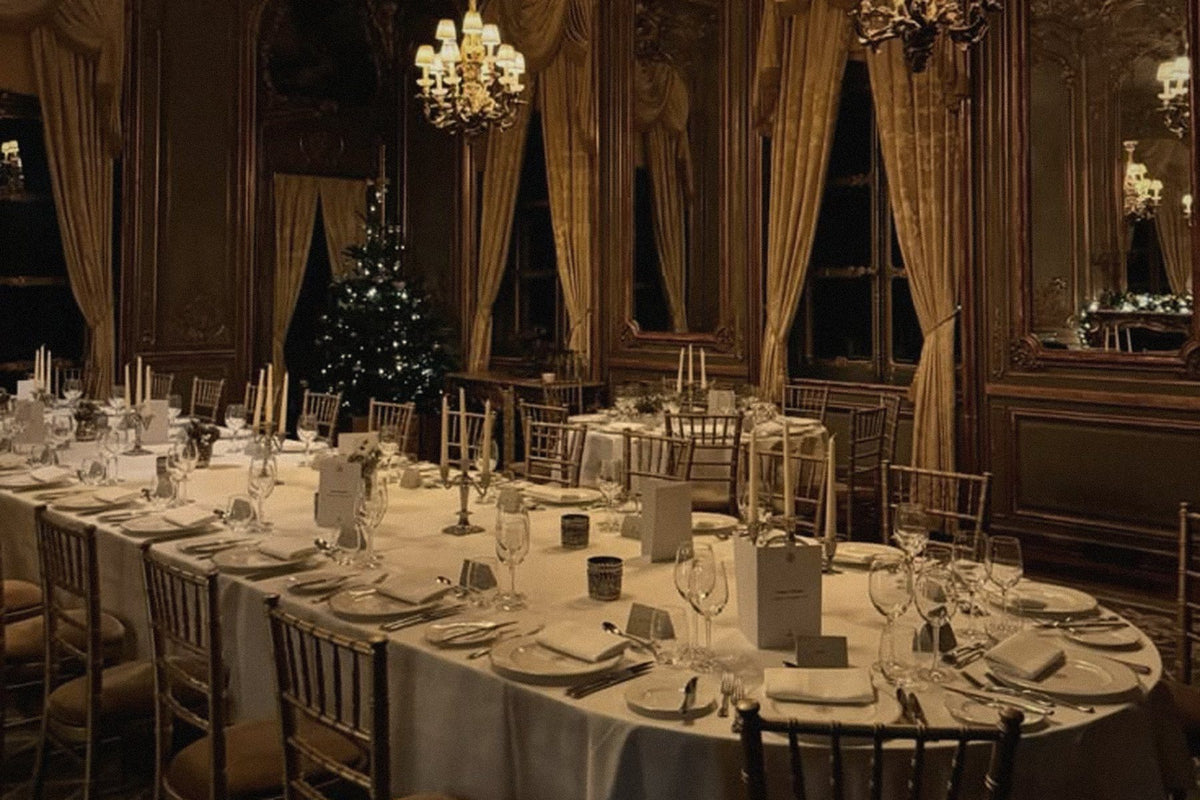
Some dinners stay with you for years, and it is almost never because of the menu. It is because you were seated next to someone unexpected, because the conversation took off, because the whole table burst out laughing at the same moment. Behind these successful evenings there is often a hostess who spent an hour the day before moving little place cards around the tablecloth.
The seating plan has a bad reputation. We imagine it rigid, reserved for embassies and weddings. In reality, it is the simplest tool for making sure everyone has a lovely evening.
The French table
The first peculiarity, and not the least: in France, the host and hostess do not preside at either end of the table, as in the English tradition. They sit opposite each other, in the middle of the two long sides. Each leads their half of the table, and nobody ends up exiled at the far end, away from the conversation.
This detail changes everything. It avoids a table split into two camps, it gives every guest a neighbour close to one of the hosts, and it sets the evening at the centre rather than at the ends.
Places of honour
The most honourable seat is to the right of the hostess: it goes to the most important or the eldest guest, or to someone being received for the first time. On the host’s right sits the lady of honour. The seats on their left come next, and so on, moving away from the centre.
What is a guest of honour today? Rarely a minister. Most often, it is the person you want to put at ease: a newcomer to the circle of friends, the parents of a future son-in-law, a friend going through a difficult time, or the one whose birthday it is.
Alternate and separate
Two principles then guide the rest of the table.
- Alternate men and women, as far as possible.
- Separate couples. You do not go to dinner with friends to talk to the person you have breakfast with every day.
Engaged couples are traditionally the exception, and a newly formed couple is gladly seated side by side. For everyone else, separation is a gift: it obliges each person to meet someone.
Think about the conversations
This is the subtlest part, and the most interesting. Seat together those who will have things to say to each other: two sailing enthusiasts, a young lawyer and a retired judge, a very talkative friend next to a quieter person who loves to listen. Avoid seating side by side two shy people, two exes, or two people you know hold opposing political views and enjoy airing them.
In the great houses, it is said that a hostess should be able to answer one question before dinner: what will each guest talk about with their two neighbours? If no answer comes, a place card needs moving.
Place cards
Beyond eight guests, small cards bearing each person’s name avoid hesitation when it is time to sit down. They are handwritten in ink: the first name for a dinner among friends, or “Mrs Dupont” and “Mr Martin” for a more formal dinner. The card is placed above the plate or on the folded napkin.
For a dinner of six, simply show people to their places, naturally: “Hélène, would you sit next to Paul?”
On the night
The hostess goes to the table first, or invites her guests to follow with a gesture. Wait until she is seated before sitting down. Men traditionally help the woman on their right to her seat by drawing back her chair slightly, a gesture that is disappearing but remains charming.
A good seating plan goes unnoticed. People only remember having had a wonderful evening.
Finally, the seating plan is not a contract. After the cheese, it is perfectly acceptable to change places for coffee in the drawing room, and that is often where the best conversations of the night begin.


