The art of wearing perfume
A perfume should be noticed when someone comes close, never when you enter a room. Where to apply it, how many sprays, and why to be wary of it at the table.
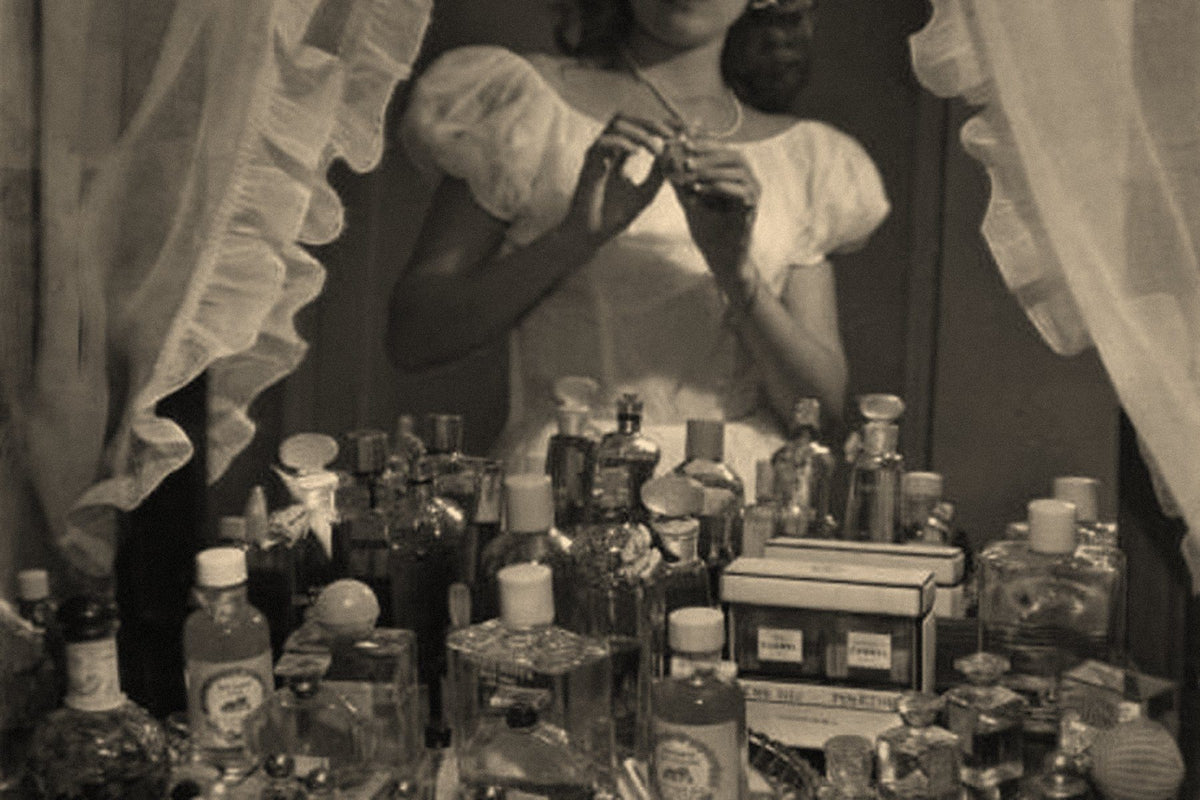
We have all met, in a lift or a restaurant, someone whose perfume entered the room before they did. The trail may be magnificent, yet it becomes almost an assault. Conversely, there is the scent you only notice at the moment of a kiss on the cheek, and remember years later. The whole difference lies in a few gestures.
Where to apply it
Perfume goes on the pulse points, where slightly warmer skin diffuses it slowly: the base of the neck, behind the ears, the inside of the wrists, the crook of the elbows. You can also spray a cloud in front of you and walk through it, which spreads the scent more lightly over hair and clothes.
One habit to lose: rubbing your wrists together after spraying. The friction warms the skin and bruises the top notes, the most volatile, which then evaporate faster. Simply let it dry.
How much
One or two sprays are enough for the day, rarely more. The problem is that our nose gets used to our own perfume very quickly: after a few minutes, we cannot smell it at all. It has not disappeared; the brain has simply stopped registering it. The temptation to add another dose is strong, and that is precisely when we tip into excess.
Concentrations
The same perfume often comes in several concentrations, and the difference is not just a question of price.
- Eau de Cologne, the lightest, fresh and fleeting.
- Eau de toilette, lighter and more diffusive, ideal for daytime.
- Eau de parfum, more concentrated and longer-lasting, to be used with restraint.
- Extrait, the richest, applied almost drop by drop.
At the table
This is the rule great sommeliers and chefs never tire of repeating: you do not come to dinner at a fine restaurant wearing a powerful perfume. The nose plays an immense role in tasting, and an overpowering trail masks the aromas of wine and food, for you and your neighbours alike. For dinner, choose a light fragrance, or go without.
At some champagne houses and at professional tastings, guests are expressly asked not to wear perfume. It is not affectation: a few drops are enough to distort the perception of a wine.
Choosing your own
You do not choose a perfume on a paper strip. Test it on your own skin and wait several hours before deciding: a perfume changes over the day, from top notes to base notes, and it is often its evolution, more than its first impression, that makes it unique. Perfumers advise testing no more than three at a time, as the nose tires quickly.
A signature
Some people wear the same perfume all their lives, until it becomes inseparable from them. Others change with the seasons, fresher in summer, woodier in winter. Both approaches are elegant. What is less so is wearing the scent of the moment, the one everyone wears, until it says nothing about you at all.
Perfume is a signature, not an announcement.


