The Orient Express, a palace on rails
A Belgian engineer’s dream, a line between Paris and Constantinople, an Agatha Christie novel and restored Art Deco carriages: the story of the most famous train in the world.
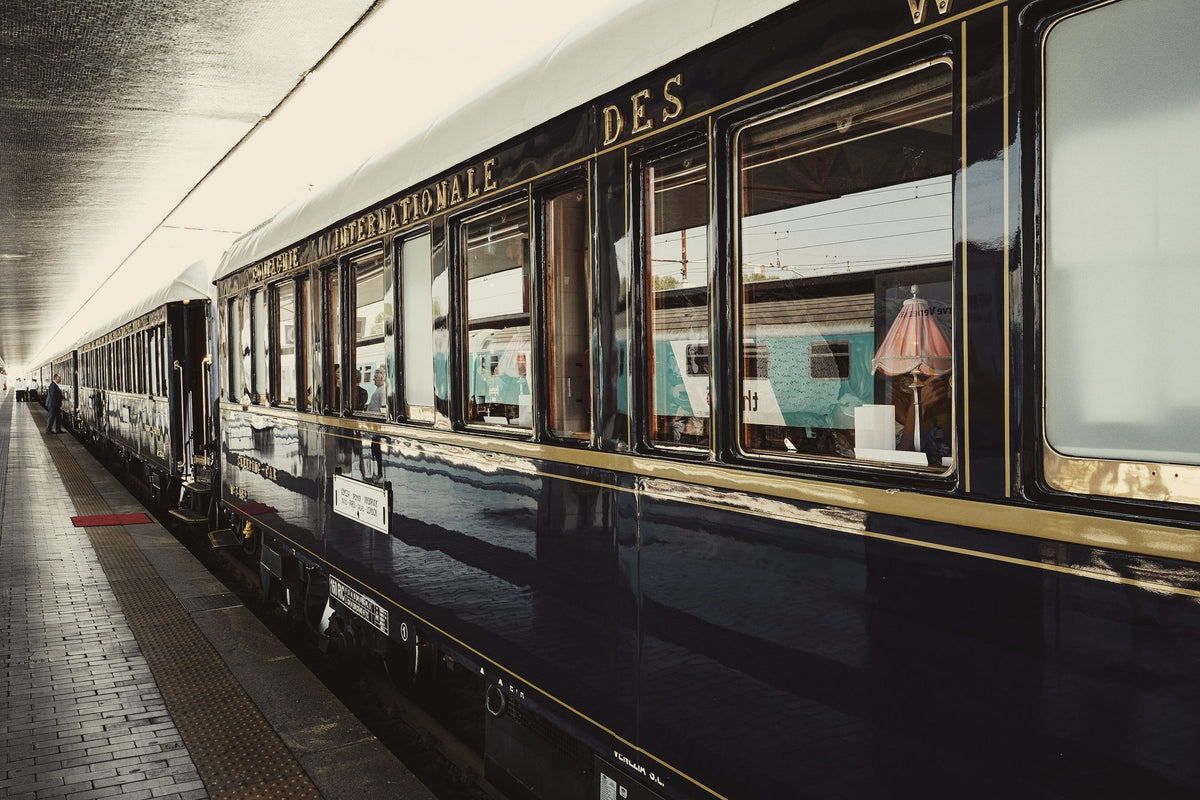
Some trains carry travellers; one carries legends. Since the late nineteenth century, the name Orient Express has conjured inlaid panelling, dinners in evening dress, diplomatic intrigue and nights across Europe. Few trains have so fed the collective imagination.
An engineer’s dream
It all began with Georges Nagelmackers, a Belgian engineer who discovered sleeping cars on a trip to the United States. He dreamt of a train that could cross Europe with the comfort of a grand hotel, with sleeping cars, a dining car and impeccable service. In 1876, he founded the Compagnie Internationale des Wagons-Lits.
In 1883, the first Orient Express left Paris for Constantinople, today’s Istanbul. The journey was not yet entirely by rail: it had to be completed by ferry and another train. A few years later, the direct line was finished, and the journey could be made in one go, in a few days.
The golden age
Between the wars, the Orient Express and the company’s other luxury trains enjoyed their golden age. The carriages were decorated by the finest craftsmen of the day: marquetry, glasswork, textiles. The glassmaker René Lalique created moulded glass panels for some carriages. Diplomats, aristocrats, writers, businessmen and adventurers crossed paths in the corridors, and the train became the ideal setting for fiction.
In 1934, Agatha Christie published Murder on the Orient Express, making the train the setting for one of Hercule Poirot’s most famous investigations. The novelist knew the line well: she had taken it to travel to the East, where she accompanied her archaeologist husband.
Decline, then rebirth
After the Second World War, aeroplanes and new high-speed trains brought about the decline of the great luxury expresses. Services deteriorated, the historic carriages were sold, and the last direct Orient Express to Istanbul ran in 1977. Some carriages were then scattered at auction.
It was an American businessman, James Sherwood, who bought several of them at auction and had them restored. In 1982, he launched the Venice Simplon-Orient-Express, a luxury train linking London, Paris and Venice in original carriages restored in the spirit of the 1920s and 1930s.
Today
The historic train still runs, mainly between Paris and Venice, and a few times a year to other destinations. Dinner is taken in evening dress, you sleep in cabins with antique panelling, and you watch the Alps roll by from the bar car, to the sound of the piano. Separately, the Orient Express name has been revived in recent years by the Accor group, with new projects for trains, hotels and even a sailing cruise ship, conceived by the architect and designer Maxime d’Angeac.
Customs on board
- Dinner is taken in evening dress, usually a dinner suit or a dark suit.
- Book well in advance, especially for spring and autumn dates.
- The historic cabins are small: travel light.
- The bar car is the social heart of the train; it is where you get acquainted.
You do not take the Orient Express to arrive. You take it to travel.


