How to recognise a Hitchcock film
Suspense rather than surprise, an object everyone chases that serves no purpose, an enigmatic blonde and a director who walks across the frame: the master’s grammar, in five clues.
Alfred Hitchcock directed more than fifty feature films, first in England and then in Hollywood, from the silent cinema of the 1920s to the 1970s. He is perhaps the filmmaker whose touch is the quickest to recognise. A few minutes are enough, provided you know what to look for.
First clue: suspense
Hitchcock explained it himself, with an image that has become famous. Two characters are chatting at a table under which a bomb is hidden. If it explodes without warning, the audience gets fifteen seconds of surprise. If they have been shown the bomb, if they know it will go off at a precise time and the characters do not, the same banal conversation becomes unbearable. The audience then lives through fifteen minutes of suspense.
All of Hitchcock’s cinema rests on this principle: letting us know a little more than the characters. That is what makes his films so gripping, even when you already know the ending.
Second clue: the MacGuffin
A secret document, a chemical formula, a sum of money, a wine bottle filled with uranium: in Hitchcock’s films, characters often chase an object that, deep down, nobody cares about, least of all the director. He called it the MacGuffin. Its only role is to set the story in motion. What matters are the characters and what they go through.
Third clue: the ordinary man
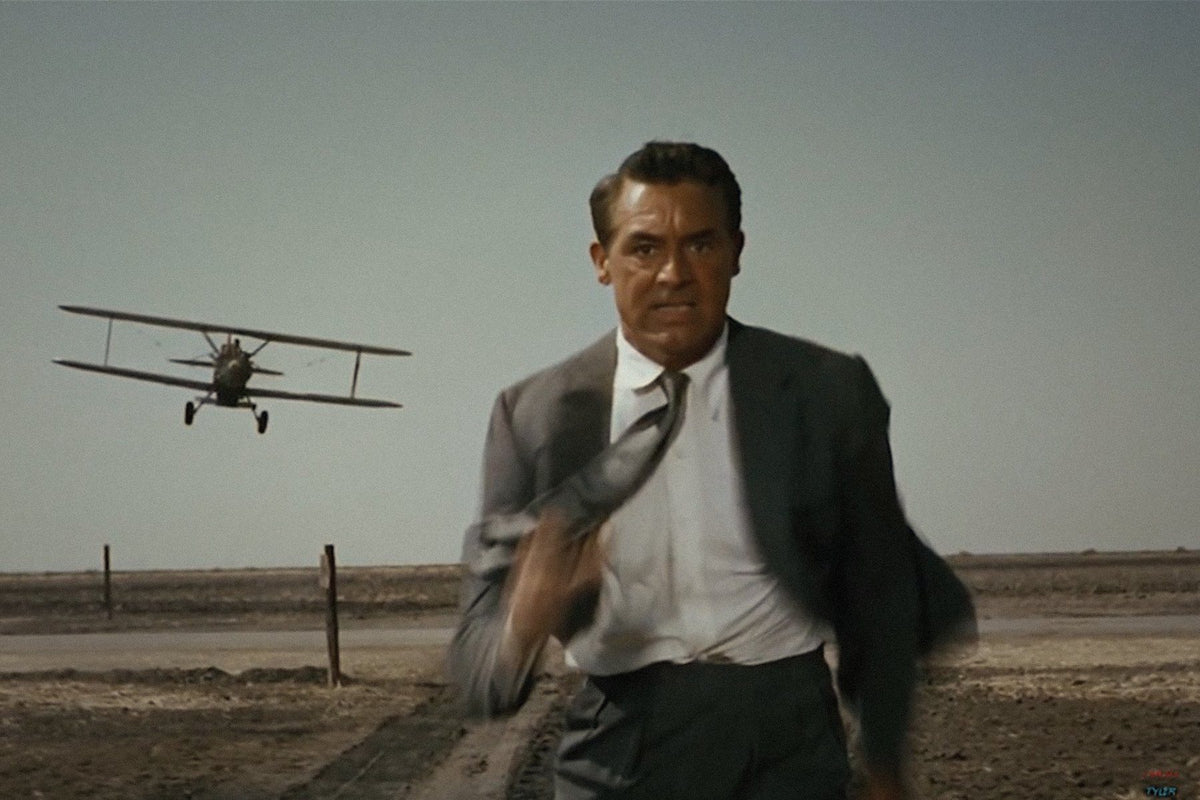
The Hitchcock hero is often an ordinary man, an advertising executive, a photographer, a teacher, caught up in an affair beyond him, wrongly accused, pursued by both the police and the real culprits. Cary Grant running through the cornfields chased by a crop-duster in North by Northwest remains the perfect image of it.
Fourth clue: the blonde
Grace Kelly, Kim Novak, Tippi Hedren, Eva Marie Saint: Hitchcock’s heroines are often blonde, elegant, distant and mysterious. He said he preferred women whose fire smoulders beneath the ice to those who show everything. Their costumes, often designed by Edith Head, left their mark on the history of fashion as much as on that of cinema.
Fifth clue: the cameo
Hitchcock appears fleetingly in most of his films: a passer-by missing a bus, a man carrying a double bass, a passenger on a train, a figure in a newspaper photograph. These cameos became a game for audiences, and the director ended up placing them early enough in the film for people to stop watching out for them and concentrate on the story.
In 1962, François Truffaut interviewed Hitchcock for a week, film by film. Their conversations, published in 1966, became one of the most widely read books on cinema in the world. They reveal a director of obsessive precision, who said he had the entire film in his head before the first day of shooting.
Where to start
- Rear Window (1954): a housebound photographer, a courtyard, perhaps a murder. Suspense in its purest form.
- To Catch a Thief (1955): Cary Grant and Grace Kelly on the Riviera. The lightest and most elegant.
- Vertigo (1958): the masterpiece, often ranked among the greatest films ever made.
- North by Northwest (1959): the perfect adventure film.
- Psycho (1960): best watched knowing as little of the story as possible.
Suspense is knowing what the hero does not.


